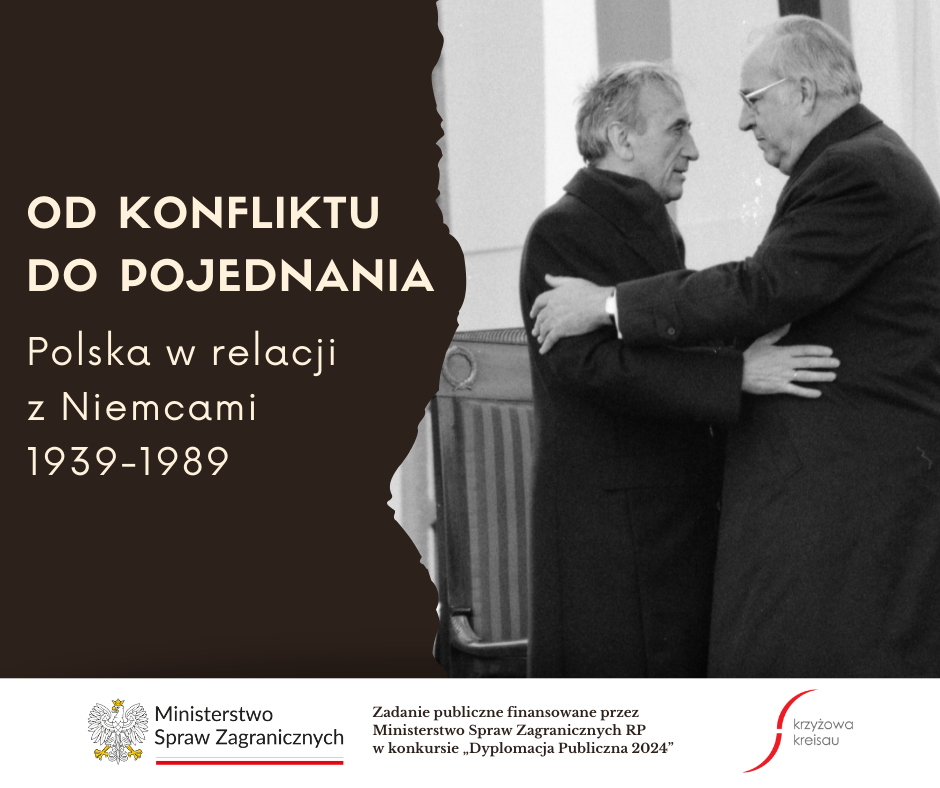
 The 85th anniversary of the outbreak of World War II, which falls in 2024, as well as the 35th anniversary of the Reconciliation Mass at Krzyżowa, provide an excellent opportunity to familiarise German audiences with the historical experiences of Poles and Poles and to sensitise them to the differences in Polish and German memories of these events. These are special events, as they focus on both the extremely negative experiences of Europe, especially of the Polish-German neighbourhood, which should not only be a warning but also a point of constant reflection. As well as the positive ones, which should still inspire us today to think about the strength of civil society and models for our mutual relations.
Read more: New project || From Conflict to Reconciliation. Poland in its relationship with Germany 1939-1989.
.png)
In May 2024, at first glance, it seems difficult to imagine a less favorable international context for celebrating the 20th anniversary of Poland's membership in the EU than the conditions still prevailing just beyond the eastern borders of both the EU and Poland. The ongoing full-scale war between Russia and Ukraine, which has been raging for over two years, and the troubling political developments in Georgia under Russian influence, provide an opportunity to reflect on the significance of the European integration process for Poland – and vice versa.
Looking back to Poland's accession to the EU in May 2004, it is important to remember that this moment marked both an end and a beginning. It effectively closed the so-called post-communist period, during which Poles – along with Czechs, Slovaks, Hungarians, Estonians, Latvians, Lithuanians, Slovenians, and later Bulgarians and Romanians who joined the Union three years later – underwent a deep political, economic, and social transformation that enabled them to join the common market and community formed over half a century earlier during the Cold War's geopolitical division of the European continent. In this context, the frequently cited phrase "return to Europe," as seen on the cover of the May 1, 2004 issue of the weekly magazine Polityka (no. 18 (2450)), aptly reflected the satisfaction of many Poles with the achievements of the few years that had passed since the start of the systemic transformation in 1989.
Read more: 20 Years of Poland in the European Union: A Different Perspective on the "Return to Europe"
 A conference preceding the official opening of the exhibition '1939-1945: Years that Changed the World' took place in Krzyżowa on 19 April 2024. The exhibition was specifically designed for schoolchildren and teachers and tells the story of the causes, course and long-term consequences of the Second World War. It presents these events in the broadest possible context and from different perspectives. So that it is comprehensible not only to a Polish audience, but also to people from other countries who visit Krzyżowa.
The exhibition consists of two parts. The first presents the origins and course of the Second World War, the differences between occupation policies in the West and East of Europe, and shows what resistance looked like in different European countries - including the activities of the anti-Nazi opposition in Germany. The second part of the exhibition discusses the key issues necessary for understanding history and its consequences. As well as showing the mechanisms of hatred that led to the Holocaust, the different attitudes displayed by people who experienced the war and occupation and the differences in Polish and German memories of the war are discussed. The exhibition also addresses the contemporary consequences of the Second World War - from conflicts in Africa, genocide in the former Yugoslavia, to Russia's criminal attack on Ukraine.
Read more: The conference and the opening ceremony of the outdoor exhibition "1939-1945: Years that Changed...


.jpeg)