The House on the Hill in Krzyżowa is a place of exceptional historical and symbolic significance. Located away from the main palace and farm complex, the building remained for many years a more private space for the von Moltke family. World War II, it became the meeting place of members of the Kreisau Circle — one of the most important groups of German resistance to Nazism.
Today, the House on the Hill remains the centre of commemorative and educational activities carried out by the Krzyżowa Foundation for Mutual Understanding in Europe. Guided tours, meetings, and programmes for young people and adults participating in historical and civic projects take place here.
The historical education conducted at the House on the Hill focuses not only on the history of the Kreisau Circle itself, but also on contemporary ways of interpreting this history. Particular emphasis is placed upon reflection on the tragic history of World War II and on the concept of “resistance”, which is understood differently in Poland and Germany.
The House on the Hill is also an important site for telling the story of grassroots Polish-German dialogue during the Cold War, which ultimately led to the establishment of the Krzyżowa Foundation.
The House on the Hill and its Residents before 1945
.jpg) The House on the Hill was built at the beginning of the 19th century. In 1873, the building was purchased by Field Marshal Helmuth Bernhard von Moltke. From that time onwards, the house formed part of the estate and was inhabited by widows and relatives of the von Moltke family. Between 1928 and 1945, Helmuth James von Moltke lived there with his family rather than in the palace itself. Living in the palace had become too expensive for the family, which had fallen into debt due to Germany’s difficult economic situation and the poor management of the estate. Thanks to the many years of dedicated work by Helmuth James and his wife Freya, the estate was ultimately saved from bankruptcy.
The House on the Hill was built at the beginning of the 19th century. In 1873, the building was purchased by Field Marshal Helmuth Bernhard von Moltke. From that time onwards, the house formed part of the estate and was inhabited by widows and relatives of the von Moltke family. Between 1928 and 1945, Helmuth James von Moltke lived there with his family rather than in the palace itself. Living in the palace had become too expensive for the family, which had fallen into debt due to Germany’s difficult economic situation and the poor management of the estate. Thanks to the many years of dedicated work by Helmuth James and his wife Freya, the estate was ultimately saved from bankruptcy.
.jpg) The House on the Hill became a place for numerous meetings. Distinguished figures from politics and the media were welcomed there. In 1928, Dorothy Thompson — one of the most influential American journalists of the first half of the 20th century — visited the estate. In 1934, because of her critical attitude towards the Nazis, she was expelled from Germany. In 1932, Edgar Ansel Mowrer, an American journalist and recipient of the 1933 Pulitzer Prize, also visited the house. Due to his critical publications, he too was forced to leave Germany in the autumn of 1933.
The House on the Hill became a place for numerous meetings. Distinguished figures from politics and the media were welcomed there. In 1928, Dorothy Thompson — one of the most influential American journalists of the first half of the 20th century — visited the estate. In 1934, because of her critical attitude towards the Nazis, she was expelled from Germany. In 1932, Edgar Ansel Mowrer, an American journalist and recipient of the 1933 Pulitzer Prize, also visited the house. Due to his critical publications, he too was forced to leave Germany in the autumn of 1933.
Above all, the House on the Hill was the family home of Helmuth James and Freya von Moltke. It was here that they raised their sons: Helmuth Caspar (born 1937) and Konrad (1941–2005).
Meetings of the Kreisau Circle at the House on the Hill
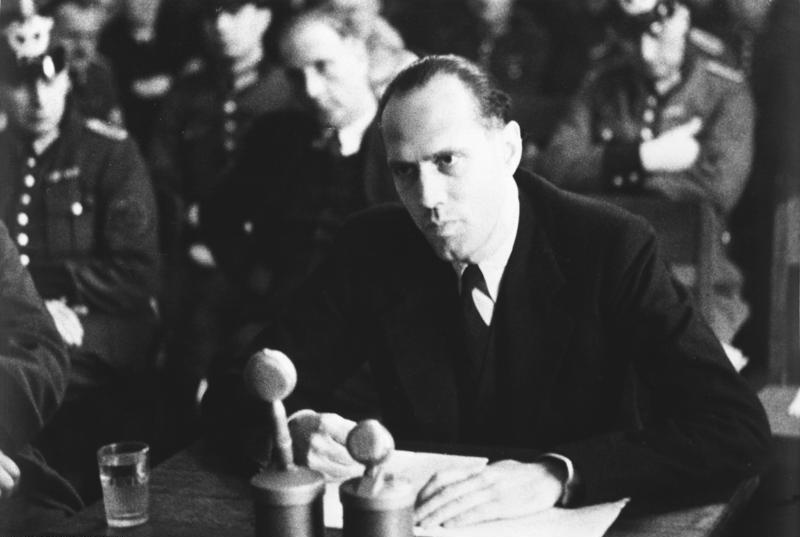
Between 1942 and 1943, under the pretext of weekend gatherings of friends, three principal meetings of the Kreisau Circle took place at the House on the Hill (a name later used by the Gestapo during its investigation of the opposition group). The group’s aim was to create a “new order” — a spiritual, political, and social renewal of Germany following the collapse of the Third Reich, which the members of the Circle anticipated.
During the meetings, participants discussed theses prepared earlier in smaller thematic groups. Their deliberations concerned the legal order, foreign policy, the economy, social issues, and law; but also war crimes; the relationship between the Church, culture, and education; as well as agricultural policy in a future democratic Germany.
For their anti-state activities, some members of the Kreisau Circle were arrested and sentenced to death. Among them were the organisation’s co-founders: Helmuth James von Moltke, who was executed on 23 January 1945, and Peter Yorck von Wartenburg.
The House on the Hill after the Establishment of the Krzyżowa Foundation for Mutual Understanding in Europe
.jpg)
In 1990, the building was purchased for the Krzyżowa Foundation.
Its residents, like the tenants of other parts of the palace complex, moved into houses in the surrounding area that had been renovated or rebuilt by the Foundation.
Beginning in 1990, the meadow next to the House on the Hill hosted the first international youth meetings. Participants also assisted with renovation work.
Renovation work and a thorough reconstruction aimed at restoring the pre-1945 interior layout were completed only in 1998.
In June 1998, the House on the Hill was officially opened in the presence of Polish Prime Minister Jerzy Buzek and German Chancellor Helmut Kohl, marking the culmination of the long process of restoring the estate in Krzyżowa.
The opening ceremony was also attended by the former hostess of the house, Freya von Moltke; Ewa Unger, Chairwoman of the Board of the Krzyżowa Foundation for Mutual Understanding in Europe; and the widows of Kreisau Circle members — Clarita von Trott zu Solz and Rosemarie Reichwein.
Spatial design
Room 1. Kreisau
The first room on the ground floor of the House on the Hill is the Memorial Room dedicated to the Kreisau Circle. Its design was created by Beata Gryt-Tomaszewska and Tomasz Tomaszewski.
The central element of the room is a table composed of four parts, symbolising the political, social, and religious diversity of the Circle’s members. Their juxtaposition highlights co-operation despite differences. The slight separation of the table elements, arranged within a circle marked on the floor, reveals the symbol of the cross and circle.
This motif also appears on the windowpanes. The cross and circle refer to social democratic ideals — social equality, internationalism, and care for individuals and groups requiring support — as well as Christian values, which the Kreisau Circle regarded as the foundation of the post-war order.
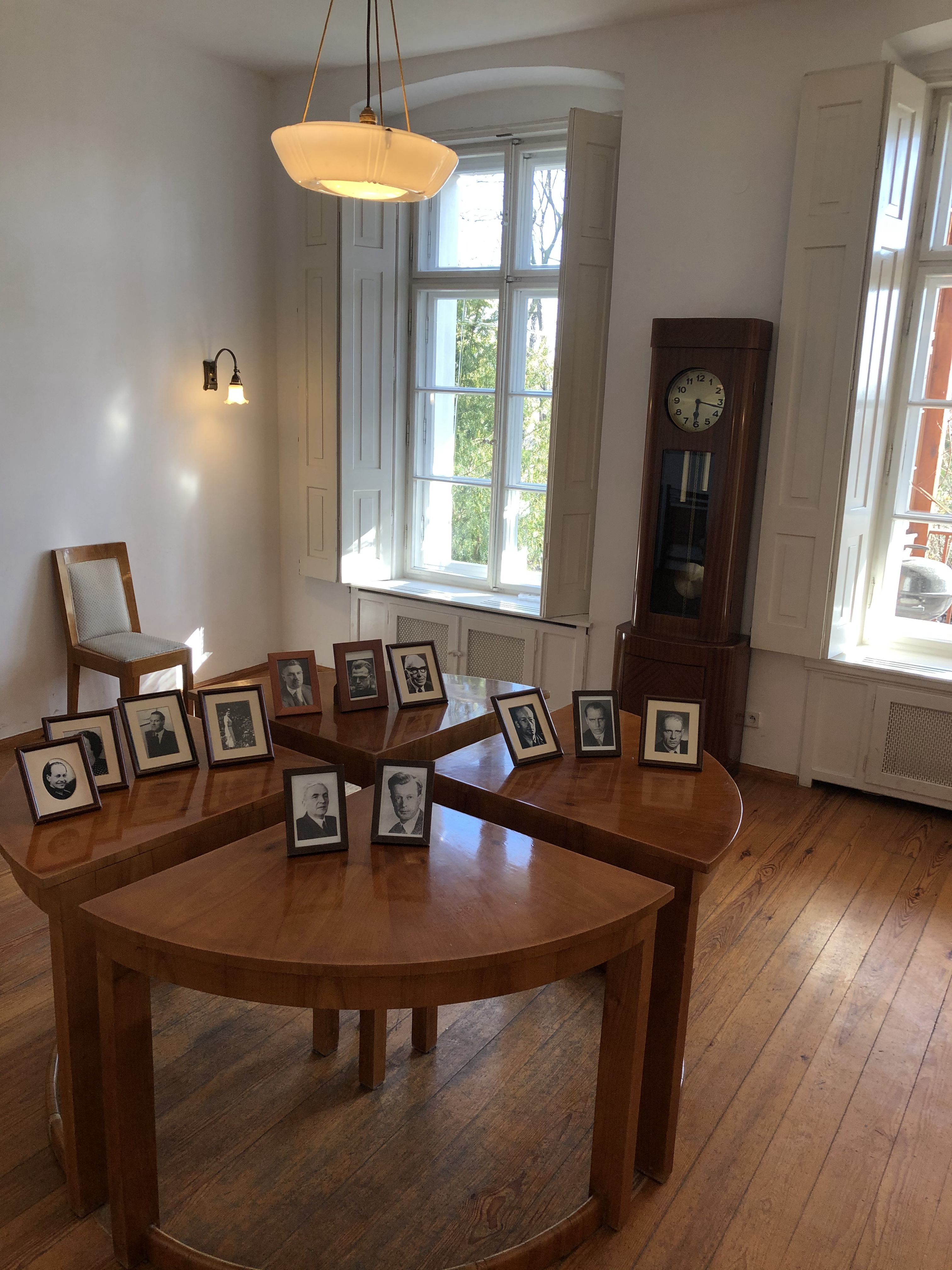
The original arrangement also included two chairs placed on opposite sides of the table: one dating from the 1930s, the other from the 1970s–1980s. Symbolically, they were intended to create a bridge between anti-Nazi resistance and post-war anti-communist opposition. Following the opening of the exhibition “Rejecting the Lie. From the History of Resistance and Anti-Totalitarian Opposition in the 20th Century”, this topic began to be addressed more frequently in the Palace than in the House on the Hill.
During renovation carried out between 2023 and 2026, the restored chairs were returned to the room. In addition, the wall plaque was replaced: it once again features a quotation by Adam von Trott zu Solz in a new Polish translation and now also includes an English translation.
Since 2026, the room has been called Kreisau, referring to the pre-war history of the site, which forms a key element of the narrative presented here.
Room 2. Kreisau / Krzyżowa
The former transitional room, where photographs of the house and its residents from various historical periods had gradually been displayed, has been newly arranged and now serves an educational function.
Since 2026, the room has been called “Kreisau/Krzyżowa”, and its main theme is migration and the personal experiences of people who were forced to leave their homes and set out on journeys without knowing their destination.
The theme of migration is presented, among other things, through the stories of two women connected with this place. The first is Freya von Moltke, the former owner of the estate in Kreisau, who, after the border changes, was forced to leave the home in which she had raised her sons. The second is Ewa Unger, whose family, fleeing from German troops, found themselves in Soviet-occupied territory and were later deported to Siberia. After returning, they were unable to go back to their family home, and instead settled in the so-called Recovered Territories.
In Wrocław, Ewa Unger learned about the Kreisau Circle. As Chairwoman of the Roman Catholic Intellectuals’ Club, she became involved in establishing the Krzyżowa Foundation for Mutual Understanding in Europe. Symbolically, as Chair of the Foundation Council, she became the new guardian of the House on the Hill.
Room 3. Krzyżowa
The room that previously served as a library has, since 2026, functioned as an educational space called “Krzyżowa”, devoted to the history of Polish-German dialogue and joint efforts to establish an international youth meeting centre on the former von Moltke estate.
The events that led to the creation of the Foundation are recalled through photographs placed on a mirror and curtain, taken in June 1989 during the visit to Krzyżowa by participants in the international conference “The Christian in Society”. By placing the photographs on a mirror in which visitors may also see themselves, the arrangement symbolically invites them to participate in Krzyżowa’s activities and encourages social engagement.
Two armchairs referring to the room’s former furnishings are also displayed here — the same armchairs used in 1998 by Prime Minister Buzek and Chancellor Kohl — together with a bookshelf containing publications and artefacts illustrating the history of Krzyżowa.
Room 4. Reflection Room
The fourth educational room on the ground floor has retained its previous character. It continues to function as a workshop space — since 2026 it is officially called the “Reflection Room”.
The room’s furnishings have been modernised, and the former tables and chairs have been replaced with pouffes and comfortable seating.
Unlike the other rooms on the ground floor, this room does not feature a dominant theme in its arrangement, making it suitable for a wide range of educational topics.